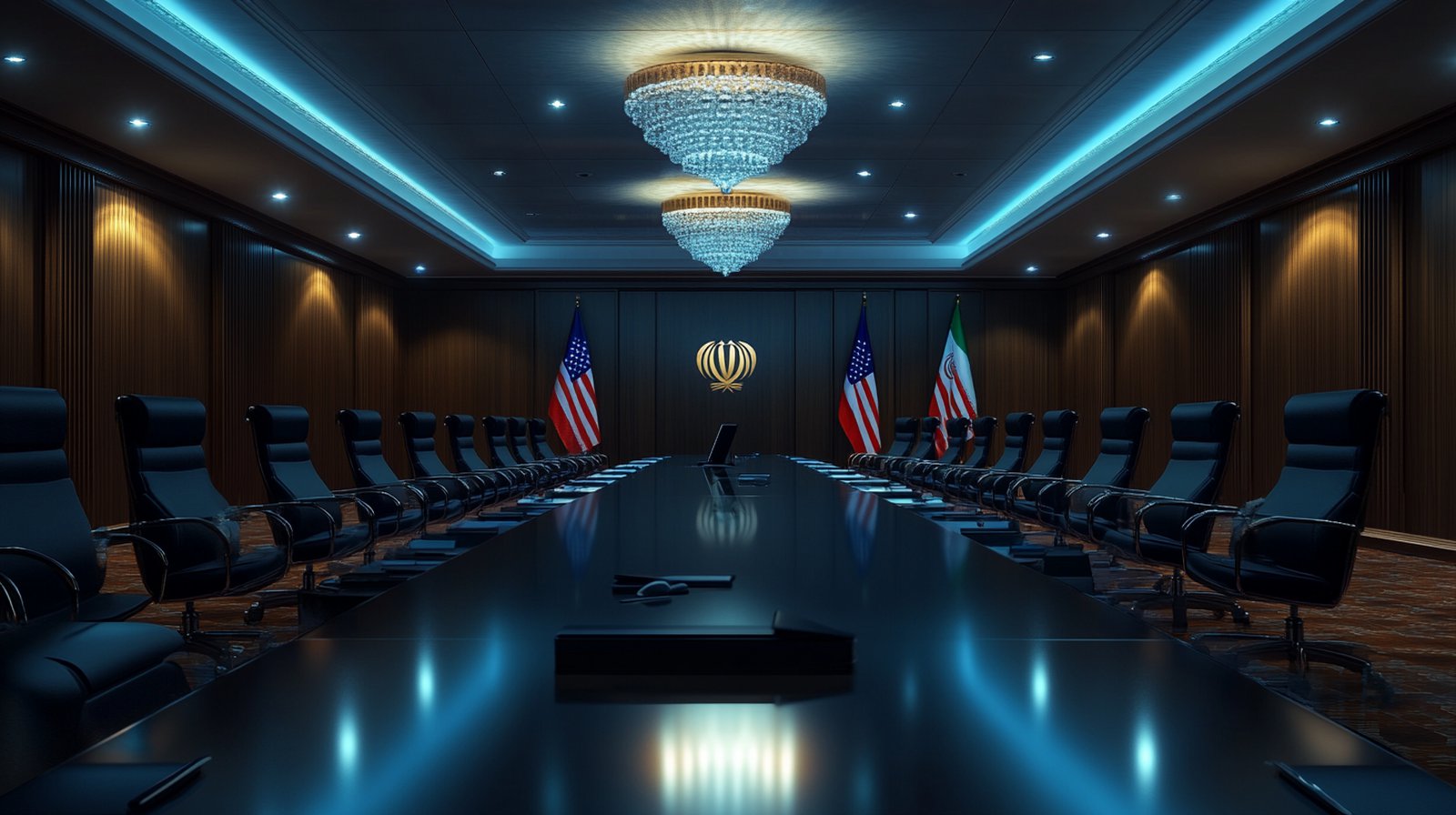
Geopolitics — April 21, 2026
⚠ Ceasefire Expires Wednesday Evening
Trump's Tweets Killed the Islamabad Deal,
and Iran Just Walked Away from the Table
Yesterday we framed the 72-hour window. Twenty-four hours later the shape of that window has changed. Islamabad's 21-hour marathon collapsed. Iran told Pakistan it will not send negotiators. And the American president spent the weekend publishing a version of the deal that had not been finalized. Here is what is actually on the board with one trading day left before expiry.
24H
Until Ceasefire Expires
21H
Islamabad Marathon — No Deal
16
Ships Through Hormuz Monday
$20B
Cash-for-Uranium Offer — Stalled
What Changed Overnight
Five days ago, Pakistan was hosting marathon talks and briefings called the framework "close." Four days ago, Axios broke the $20B cash-for-uranium scoop. As of Monday evening, Iran says it is not going back to Islamabad. Pakistan's foreign ministry said it is still "prepared to host multi-day talks" — but only one of the two delegations is willing to board a plane.
Apr 19
Islamabad 21-hour marathon ends without a deal. US and Iranian delegations spend a full day and night behind closed doors. VP JD Vance publicly blames Iran's refusal to suspend enrichment. Iran's lead negotiator says the US "failed to earn trust."
Apr 20
Iran refuses to resume talks. Foreign ministry spokesman Esmaeil Baghaei: Washington "violated the ceasefire from the beginning of its implementation," citing the US naval blockade since April 13 and the overnight capture of the Touska. Pakistan's shuttle diplomacy stalls.
Apr 20
Trump threatens Iran directly on Truth Social. Says extension is "highly unlikely" and warns that "lots of bombs start going off" if no deal is reached before the ceasefire lapses Wednesday evening.
Apr 21
Only 16 ships transit Hormuz. Insurance rates still doubled since the Touska seizure. Captains and owners refuse the route until they see how Wednesday closes. The blockade bleed continues.
The new shape of the window: Yesterday's question was "can they extend on Wednesday." Today's question is "is there anyone left in the room to extend with." Those are two different markets.
The Islamabad Post-Mortem
According to sources briefed on the Islamabad talks, the 21 hours broke on three hard walls:
- Duration of enrichment suspension. US proposed "unlimited." Iran countered with a renewable 24-month freeze tied to sanctions relief milestones. Neither side moved.
- Disposition of the 2,000 kg stockpile. US wanted export to a third country under IAEA seal. Iran refused any physical removal of material from Iranian soil — offered only a monitored dilution to reactor-grade.
- Hormuz enforcement. Iran demanded the port blockade lift as a precondition to any Phase 2. US refused, calling the blockade a sanctions-enforcement tool distinct from the ceasefire.
None of these are surprises. The Islamabad room was structurally unable to close on any of them without a political decision from the two capitals. What Islamabad could have done — and didn't — was produce a face-saving extension framework that let both sides claim progress. That didn't happen because, while the negotiators were working, the American side was publishing something else entirely.
How Trump's Posts Sabotaged His Own Deal
Over the weekend, as the Islamabad delegation was still at the table, the US president negotiated via the press — with a set of claims that directly contradicted what his own team was negotiating. Sources familiar with the Iranian side told CNN the posts made the room unworkable.
Three problems with that sequence, all of them fatal to the Islamabad room:
- "Unlimited" was not on the table. The Iranian delegation had tabled a 24-month freeze. Declaring "unlimited" publicly made it impossible for the Iranian lead to return to Tehran with the 24-month framework — the supreme leader's office had to repudiate something that was never actually agreed.
- "Remove the enriched uranium" crossed the red line. Iran's offer was dilution on Iranian soil under IAEA seal. "Remove" implies physical export. Tehran read the post as the US unilaterally re-writing the terms of the talk it was still in.
- "Done" destroyed the ambiguity. Diplomatic frameworks need the ability for both sides to claim a partial win. Publicly declaring the deal closed removed that option and forced Tehran into a zero-sum posture.
Why this matters for traders: The probability of a clean extension fell sharply on Monday not because of anything the negotiators did, but because the political cost of Tehran returning to Islamabad just jumped. Iran's lead now looks like a patsy at home if he flies back. The room emptied before expiry because one side made the room indefensible.
Iran's Walkout — What the Language Tells You
Baghaei's Monday statement is worth reading closely. It did three things simultaneously:
- It blamed the US, not the ceasefire. The framing is "Washington violated the ceasefire from the beginning" — which leaves the ceasefire itself intact as a legal instrument. Iran is not walking away from the truce; it is saying the truce has already been broken, which is a different kind of exit.
- It named two specific breaches. The April 13 naval blockade and the overnight Touska seizure. Both of these are US actions, both are ongoing, and both give Iran a grievance framework that doesn't require new escalation — it just requires not moving.
- It did not name a US base. This is the single most important read. If the statement had said "US forces at Al-Asad" or "US carrier group in the Gulf," the retaliation menu from yesterday would have jumped to Options 3 or 4. It didn't. The language stayed on "armed piracy, legal response." That is still Option 1/2 territory.
Structural read: Iran is posturing for a pause-and-wait, not an escalation. The goal is to let the ceasefire lapse on paper while keeping the door legally open. If the US responds with kinetic strikes on Wednesday, Iran can credibly claim it was the aggrieved party. If the US blinks, Iran pockets the credibility and restarts talks from a better position. The walkout is a negotiation tactic, not a break.
The Two Trajectories Markets Must Price
With 24 hours to expiry and the talks frozen, everything compresses into two scenarios. Everything in between is noise.
Trajectory A — Ceasefire Lapses, US Strikes
Probability: 38%
Expiry comes and goes without extension. Trump follows through on the "lots of bombs" posture — limited US strikes on Iranian military targets inside Iran within 72 hours of expiry. Iran executes Option 1 or Option 2 retaliation from yesterday's menu (naval probe or proxy strike). Markets reprice war-premium for 2–3 sessions before stabilizing.
- Gold: +5–7%, with $5,000 now a realistic magnet.
- Bitcoin: -5 to -8% on initial risk-off, bounces +15% over two weeks as DXY weakens.
- Oil: +12–18% on the week, WTI Monday open is the signal.
- Equities: -2 to -4% gap lower, mega-cap tech leads the bounce.
Leading indicator: US carrier group movement in the next 18 hours. If Eisenhower reposition toward the northern Gulf, the trade is already on.
Trajectory B — Eleventh-Hour Pakistan Extension
Probability: 34%
Pakistan's foreign minister flies to Tehran in the next 24 hours with a face-saving framework. Both sides agree to a 10–15 day technical extension, carefully worded to avoid either side conceding anything new. Markets exhale but don't sprint — the underlying walls (enrichment duration, uranium disposition, Hormuz blockade) all remain. Gold fades the war premium but keeps a floor from structural DXY weakness.
- Gold: -3 to -4% in the 48 hours after announcement, finds support at $4,550.
- Bitcoin: +4–6% on relief bid, momentum continues if equities confirm.
- Oil: -8 to -10%, curve flattens, Brent back under $85.
- Equities: +1.5–2% gap higher, small-caps outperform.
Leading indicator: Any Pakistan PMO readout or Iranian foreign ministry tone-shift between now and Wednesday morning. Silence from Pakistan through Tuesday evening is not a good sign.
Trajectory C — Drift and Ambiguity
Probability: 22%
Ceasefire lapses on paper with no formal extension and no immediate kinetic response. Both sides quietly avoid escalation while backchannels continue. Blockade remains, Hormuz traffic stays thin, the $20B offer stays on the wire without being picked up. This is the "quiet winter" outcome and is what happened historically after the 2019 tanker war.
- Gold: grinds +1 to +2% per week on slow-burn haven bid.
- Bitcoin: rangy, correlation with Nasdaq dominates.
- Oil: structurally bid but without fireworks, $78–90 range.
- Equities: boring, sector rotation, not index moves.
Leading indicator: Wednesday night through Friday with no major headlines is the tell. Drift is confirmed by absence of news, not presence.
Trajectory D — Full Breakdown
Probability: 6%
Expiry triggers a miscalculation inside 48 hours. A tanker event, a missile at a US base, or a decapitation-style US strike that pulls in regional proxies at once. This is the tail that wipes out the $20B offer and relights the March air-campaign trajectory. Low probability but asymmetric consequences.
Market impact: Gold +10–15%, BTC -12% then +25%, oil +30%+, VIX 45+, equities -6 to -8% gap. This is not a trade — this is a hedge.
24-Hour Trader Playbook
| Asset |
Pre-Expiry (Now → Tue Close) |
Post-Expiry (Wed Night → Fri) |
| Gold (XAUUSD) |
Do not chase; $4,680 is a fair zone. Size scales on dip to $4,550. |
If gap up on Asia open > $4,800, fade the first 2% on wedge. Trajectory A: target $4,950–5,000. Trajectory B: breakeven by Friday close. |
| Bitcoin (BTCUSD) |
Neutral. Correlation with risk-off spikes on headlines; de-risk if long beta. |
Trajectory A: buy first wash toward $82K with defined risk. Trajectory B: chase only if $97K reclaim. Avoid middle. |
| Oil (WTI) |
Monday close around $82 is the line. Above = risk-on pricing; below = denial pricing. |
Trajectory A: gap to $94–98, hold above $90 makes a case for $110. Trajectory B: $74–76 fill of the backwardation. |
| DXY |
Low volatility, range-bound. |
Both trajectories weaken DXY structurally. A is faster. Long EUR/USD vs short DXY is cleaner than gold-only. |
| VIX |
Cheap. 16–17 area is a bargain hedge. |
Trajectory A: 28–32 print. Trajectory B: fades to 13. |
What to watch in the next 18 hours: Pakistan foreign ministry readouts, any movement of the Eisenhower carrier group, Iranian state TV vocabulary (still "armed piracy" or shifted to "Zionist handlers"?), and crude insurance quotes out of Lloyd's. These four give you the scenario call before expiry arrives.
Related Reading
Get the Wednesday call before expiry hits
XAU Sentinel posts scored market-sentiment updates every 15 minutes to our Telegram channel. Free. No card, no signup — just the signal.
Join the Telegram channel →
Disclaimer: This is analysis, not trade advice. Geopolitical windows invalidate fast — position size accordingly and assume the scenario probabilities will move again before Wednesday evening.